Showing posts with label Stewardship. Show all posts

Wednesday, December 30, 2020

Water for a thirsty man in the desert

Hedge Row
The hedge row

This fall, inspired by videos of people starting trees from seed I collected a bucket full of acorns from the "mighty" oak that is in an old fence line hedgerow in the field behind us. The fence line has obviously existed for some time and remnants of three different type of fencing materials can be found - stone, wire, and wood. For this collection work, I used one of my favorite foraging/harvesting tools -- a $0.99 plastic children's sand pail. With an hour's worth of work, I was able to collect most of a bucket's worth of acorns.  

I figure this tree is an exceptional source for seed as it grows in a tiny sliver of wild between two farm fields and those fields have been badly abused by 100+ years of broken agricultural practices. The soil in those fields is spent and crops only grow with chemicals. It took me 15 years of letting the ground lay fallow just to be able to support tree growth in the land I have that used to be part of these fields. So if this oak, the mother/hub tree of this area, has survived and thrived in spite of that, it hopefully will provide some nice local genotype stock to add to my young food forest plantings. 


My "mighty oak"
My "Mighty Oak"

So with a 5 galleon bucket full of water, I separated the bad from good seed. The bad ones float. I lost two-thirds to three-quarters of the seed that I harvested. And the water showed why, bugs. Lots of acorn eating larvae floated up with the water. I never imagined I would end up with so few acorns left. But regardless, I sowed some in pots to let the winter do her germination magic and will move any spouted seeds to larger containers come spring. I also scattered some in the wild areas to let the acorns sprout and grow all on their own.


Top: My acorn harvest
Bottom: How few acorns passed the sink test

Not long after this, I visited a local nature center with healthy and strong forest areas of pines, oaks, beeches, and more. On a whim, I collected 2 handfuls of acorns from underfoot on the trails. When I soaked them in water to separate out the bad from the good, I got completely different results. I ended up with somewhere between one-fifth and one-tenth loss. 

After considering the results for a while, it became clear why I saw such different experiences. The oak behind my house is one of only a couple of acorn producing trees in the that hedgerow. Whereas the nature center has many, many such trees. "My" tree is supporting more than its fair share of native fauna life and is in a sense to those creatures, like a glass of water for a man in the desert dying of thirst. If you can, plant oaks as they are powerhouses of support for our native animal life. See writings by Doug Tallamy to learn about just how critical they are. 

And I will let you know come spring time how my acorn germination project has fared.

Some additional photos:

Oak Gall
An oak gall - a small insect grows inside of these on oak trees

Oak leaves & acorn
Acorns and leaves of my "mighty" tree

Old fence line
What lies at the oak's feet - old fence line materials

Sorted acorns
The few good acorns after sorting

Turkey tail fungi
Turkey tail fungi growing under the oak's canopy


Wednesday, September 30, 2020

Responsibilities

Monarch Butterfly on Goldenrod

 “The findings of contemporary astrophysics suggest that we might do well to settle ourselves imaginatively into an endlessly transforming universe without fixed beginning or end. Chemistry, microbiology, and behavioral sciences confirm a fundamental kinship extending from the earth itself through all living things, from the tiniest bacteria to the largest blue whale. The recent discovery of possible bacteria on rocks from Mars may reveal that such kinship extends throughout the solar system – and much further. Our deepening awareness of the impermanence of even the most solid and stable-seeming structures – mountains, seas, the atmosphere, the countless, wheeling galaxies – has become poignant. Human life, indeed, all life, can now be seen as more interconnected, and simultaneously more fragile, than past generations of Western thinkers could concede. In the ongoing effort to gain moral control over our own relentless defensive and economic drives – including learning to control our own masterworks of impermanence: our nuclear weapons – we must now struggle with spiritual responsibilities to the earth and all its future generations, nonhuman as well as human.”  

-- Rafe Martin, “The Hungry Tigress”

Friday, November 20, 2015

Special and Unique Places: The Bog

There are few places that offer a more unique glimpse into the natural world than a bog. It is a pocket of conditions as well as flora and fauna that are completely different than the surrounding locale. I am fortunate to have visited a local bog on a few occasions which is not only a protected botanical preserve but it has also been designated as National Natural Landmark by the National Park Service. This place, The Zurich Bog, is located in Arcadia, New York. It is off the beaten trail to be sure, but the trip is worth it to see such a place of unique beauty. 

The Zurich Bog preserve encompasses hiking trails through a bog forest and a peat bog. There is a floating bog, a mat of vegetation over a pond, but access onto the floating bog is generally not permitted nor entirely safe.

The pictures below are only a few of the species seen there.

If you are a gardener please take note, such special places are threatened by the harvesting of the peat moss for the gardening industry. Even this protected location is threatened by the draining of water in order to harvest peat that goes on outside of the preserve. If these places are special to you as well, please choose soil mixes without peat in them. Read more about why to use no peat here.

Here are photos from the Zurich Bog Preserve. Click on any of the images to see a larger view.

Grass Pink Orchid (Calopogon pulchellus)


Tamarack (Larix laricina)


Northern Pitcher Plant (Sarracenia purpurea). Last image is the pitcher plant bloom.


White Fringed Orchid (Platanthera blephariglottis)


Spoonleaf Sundew (Drosera intermedia)


Goldthread (Coptis trifolia). Second photo also includes starflower (Trientalis borealis) and Canada mayflower (Maianthemum canadense).


Indian Pipe (Monotropa uniflora)


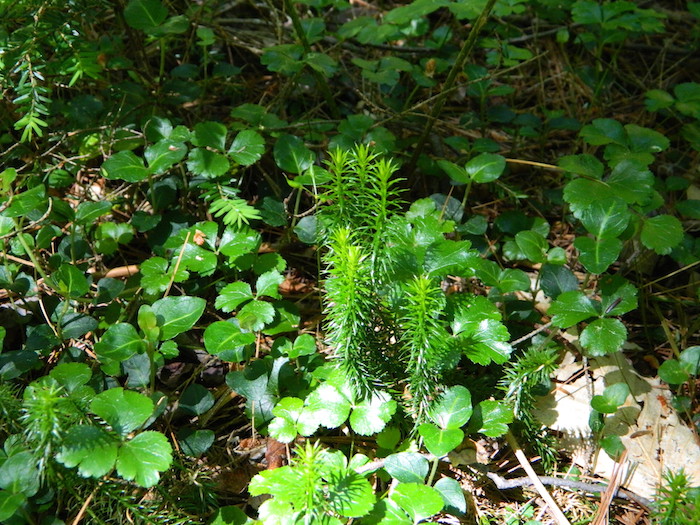
Club Moss (Lycopodium sp.). Second picture also includes goldthread (Coptis trifolia), partridge berry (Mitchella repens), and hemlock (Tsuga sp.).


Partridge Berry (Mitchella repens)


Starflower (Trientalis borealis)


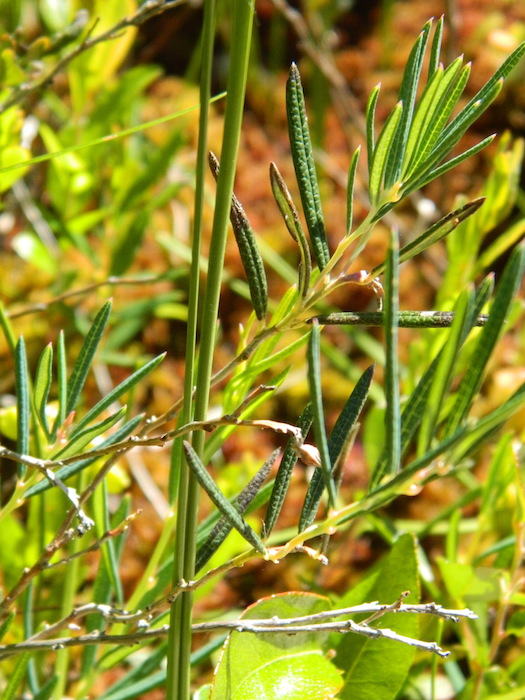
Bog Rosemary (Andromeda polifolia)


Indian Cucumber (Medeola virginiana)


Labrador Tea (Ledum groenlandicum)


Links:

Thursday, August 13, 2015

Being Kind to Wild Neighbors

While out snapping some pictures of awesome clouds and sunset, I spotted a small bee already slowed by the cooling temperatures atop some Queen Anne's Lace (aka wild carrot). In these days when pollinators are so challenged for survival, letting some of your space be filled with flowering plants whether they be wild or cultivated varieties in gardens can only help them and in the long run, our planet. Refrain from using pesticides and herbicides to make your space an oasis for you and your wild neighbors.

Clouds
Spectacular Clouds

Sunset
Stunning Sunset

Bee on Queen Anne's Lace

Monday, February 25, 2013

Northeast Wildflowers and Wild Plants

As time allows, I will be creating and uploading videos featuring wildflowers and other plants of the woodlands of the Northeastern United States. These videos will feature identification tips, ethnobotanical information, and various bits of related trivia. I have created a playlist at YouTube for this series which you may find at YouTube or you may view it below. At the time of this writing, I have three videos available but visit often since there will be more!


Friday, August 10, 2012

Native Orchid: Summer Coralroot

Summer Coralroot (Corallorhiza maculata)

While on a recent hike I spotted an usual sight - a native orchid in bloom. I had never seen this plant before and had to ID it after the hike - good photos are always key to that! The plant was tiny and appeared to be possibly a parasitic plant since it had no leaves or green parts.

The plant I spotted was the blooming Summer Coralroot (Corallorhiza maculata). This orchid's native range is much of the US and Canada, including NY State, but this is the first time I have ever spotted it. According to Wikipedia, it "is a myco-heterotroph; it lacks chlorophyll and gets food by parasitizing the mycelium of fungi in the family Russulaceae." I guess first impressions were correct!

Orchids are a special sight and one in bloom even more so.  Other than this plant and the alien orchid Epipactis helleborine, I've only seen wild, native orchids blooming in one location, Zurich Bog. I've found lady slipper plants (no blooms!) in a couple of other locations but that is it. Our native orchids are special as are the places they grow for these plants usually have very specific needs.  Poaching these plants for your own garden - very illegal given the rules of the parks and preserves they usually grow in - is unwise. Few gardens are going to meet the growing needs these plants have and the plants will die. Take only photos and leave the plants be.

Because this was such an unusual plant, I referenced my ethnobotanical sources to see if the Native peoples here used these plants. According to Moerman in Native American Ethnobotany, the local Iroquois people used this plant for:
  • Basket Medicine - Infusion of pounded root used as a basket medicine
  • Hunting Medicine - Root placed in a half cup of water and used to wash guns and clothes as a hunting medicine
  • Love Medicine - Infusion of pounded roots used as a love medicine
  • Tuberculosis Remedy - Compound infusion of roots taken for tuberculosis
  • Veterinary Aid - Infusion of whole plant added to horse's grain for heaves
  • Witchcraft Medicine - Infusion of pounded roots used as an anti-witch medicine
Looks like the Iroquois found this plant to be special as well given the number of ceremonial "medicine" uses of the plant.

For more information on this plant, see the links below. I have also included other photos below as well.

For more information:

Orchids of NY State:
http://www.dec.ny.gov/docs/administration_pdf/orchidsofny.pdf

Plants For a Future:
http://www.pfaf.org/user/Plant.aspx?LatinName=Corallorhiza+maculata

Wikipedia:
http://en.wikipedia.org/wiki/Corallorhiza_maculata

USDA Plants:
http://plants.usda.gov/java/profile?symbol=coma25

Other Images:
Entire Plant
Plant with author's hand for scale

Sunday, May 20, 2012

Herb of the Week - Goldenseal

Goldenseal, Hydrastis canadensis
 
Goldenseal, Hydrastis canadensis
This week's herb is another medicinal plant native to our eastern woodlands that is currently blooming. While we are now in the bloom time of this plant, I am fairly certain that our readers have not seen this plant or its blooms.

This plant is a small, growing only 6-12" high and it has neither showy blooms or leaves. But more than its unassuming appearance, this plant has become increasingly rare in its native range. While habitat loss has effected all native plant populations, this plant's disappearance has been largely due to the overharvesting of wild plants for the herb trade. This plant is one of the most widely used herbs in America, second only to wild American ginseng, Panax quinquefolius. [Source: Planting the Future by Rosemary Gladstar]

Goldenseal was first used medicinally by the Native peoples of North America such as the Cherokee, Haudenosaunee (Iroquois), and Micmac where it was used for a wide range of remedies including those for diarrhea, inflammations, "sour stomach," fevers, liver complaints, and cancer. [Source: Native American Ethnobotany by Daniel Moerman] Later on the Eclectic medicine practitioners of the 1800's adopted goldenseal into their pharmacopeia as well. See King's American Dispensatory for an example of how goldenseal was used by this school of herbalism. Modern herbalists use goldenseal for a number of reasons but one of the chief reasons is for its antibacterial properties.

According to a 20-year, 16 organization study report, 34,000 plant species -- 12% of the plants worldwide and 29% of the plants in the US -- have become so rare that they could easily disappear. [Source: Planting the Future] Some of our most loved native medicinal plants clearly make that list. The United Plant Savers (UpS) is a non-profit organization dedicated to conservation of native medicinal plants. UpS maintains a list of plants that are most at-risk of vanishing completely called the "At-Risk" List. Goldenseal is on that list and so the UpS recommends that you use:
  • Alternatives to goldenseal such as barberry, cultivated oregon grape, cultivated yerba mansa, and other cultivated Berberis species.
  • Use only cultivated goldenseal 
I urge you , whether you are an herbalist or just a user of herbs, to make conscious choices about all the herbs you use. If there are alternatives to at-risk plants such as goldenseal, make every effort to use them. Or if you have the right conditions, you can add such plants to your own woodland areas and grow your own.  I currently have four goldenseal plants in my own woodland garden. They are not very fussy or difficult to grow if you have a woodland area in full-shade. Outside of a plant killed by rodents digging it up during the winter, I've never lost a plant. You may buy your goldenseal plants from a number of sources - my favorite is Prairie Moon Nursery.

Wednesday, May 9, 2012

Herb of the Week - Trout Lily

Trout Lily, Erythronium americanum
Trout Lily (Erythronium americanum)

Trout lilies are one of the "spring ephemerals" - wildflowers that do all their living for an entire year in a few short weeks each spring before vanishing beneath the soil until the next year. The ephemerals group include some of the most eagerly anticipated blooming plants that I know of - trillium, bloodroot, spring beauty, hepatica, and more. The trout lily certainly holds it own in this illustrious group.

This beautiful little plant is native to the woodlands of Eastern North America. It has yellow, almost violet-like flowers and distinctively spotted leaves. These physical characteristics have inspired quite a number of common names such as: adder's tongue, dog tooth violet, serpent's tongue, and yellow snowdrop. I so love the "color" of common names!

Trout lilies are rarely sighted as single plants. If happy in their location, these plants will spread to form a colony on the forest floor. Even without the pretty flowers, a carpet of their spotted leaves is a beautiful spring-time sight.

The trout lily is edible - both the corms and the young leaves can be boiled and eaten. (Source: Peterson's Edible Wild Plants) And both the bulbs and leaves have been used medicinally as an emetic, emollient, and antiscorbutic (when fresh) and a nutritive when dry. It is also said that the root and leaves simmered in milk could be used in remedies for dropsy, hiccoughs, vomiting, and bleeding from the lower bowels while the plant boiled in oil was used for wounds and to reduce inflammation. (Source: Indian Herbology of North America by A. Hutchens) See the PFAF.org entry for more information on the plant's uses.

But with other foods and remedies more commonly available, why would you want to pick this beauty for food or medicine? Like many wildflowers, the trout lily does not reproduce quickly. It can take up to 8 years to mature from seed. Loss of habitat along with irresponsible picking or harvesting can decimate such wild plants. If you do have a woodland area or garden, be sure to invite this plant into it. If you are a wildcrafter or a forager, appreciate this plant for how it has been used but please pass it by. Take only photos and memories from it to ensure it will remain for future generations.