Friday, November 20, 2015

Special and Unique Places: The Bog

There are few places that offer a more unique glimpse into the natural world than a bog. It is a pocket of conditions as well as flora and fauna that are completely different than the surrounding locale. I am fortunate to have visited a local bog on a few occasions which is not only a protected botanical preserve but it has also been designated as National Natural Landmark by the National Park Service. This place, The Zurich Bog, is located in Arcadia, New York. It is off the beaten trail to be sure, but the trip is worth it to see such a place of unique beauty. 

The Zurich Bog preserve encompasses hiking trails through a bog forest and a peat bog. There is a floating bog, a mat of vegetation over a pond, but access onto the floating bog is generally not permitted nor entirely safe.

The pictures below are only a few of the species seen there.

If you are a gardener please take note, such special places are threatened by the harvesting of the peat moss for the gardening industry. Even this protected location is threatened by the draining of water in order to harvest peat that goes on outside of the preserve. If these places are special to you as well, please choose soil mixes without peat in them. Read more about why to use no peat here.

Here are photos from the Zurich Bog Preserve. Click on any of the images to see a larger view.

Grass Pink Orchid (Calopogon pulchellus)


Tamarack (Larix laricina)


Northern Pitcher Plant (Sarracenia purpurea). Last image is the pitcher plant bloom.


White Fringed Orchid (Platanthera blephariglottis)


Spoonleaf Sundew (Drosera intermedia)


Goldthread (Coptis trifolia). Second photo also includes starflower (Trientalis borealis) and Canada mayflower (Maianthemum canadense).


Indian Pipe (Monotropa uniflora)


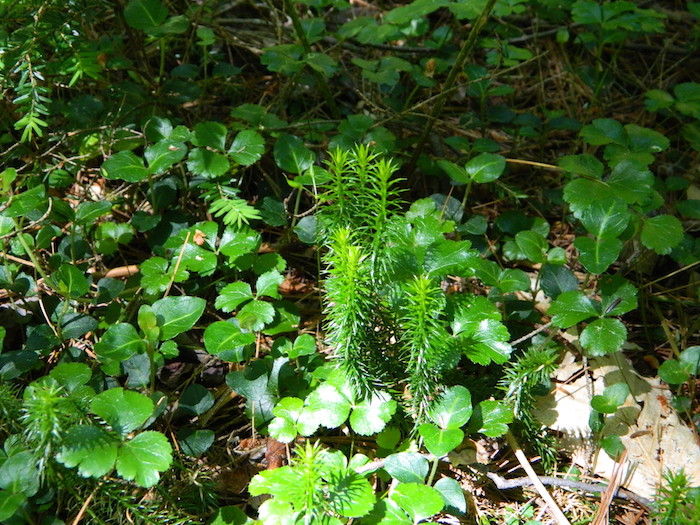
Club Moss (Lycopodium sp.). Second picture also includes goldthread (Coptis trifolia), partridge berry (Mitchella repens), and hemlock (Tsuga sp.).


Partridge Berry (Mitchella repens)


Starflower (Trientalis borealis)


Bog Rosemary (Andromeda polifolia)


Indian Cucumber (Medeola virginiana)


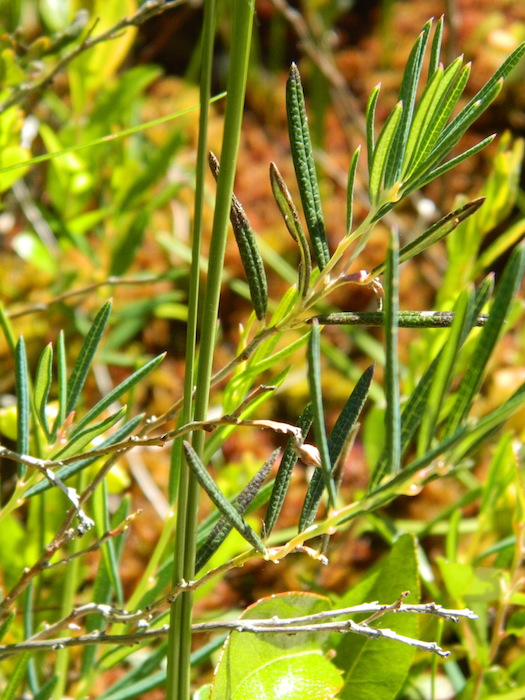
Labrador Tea (Ledum groenlandicum)


Links:

Thursday, August 13, 2015

Being Kind to Wild Neighbors

While out snapping some pictures of awesome clouds and sunset, I spotted a small bee already slowed by the cooling temperatures atop some Queen Anne's Lace (aka wild carrot). In these days when pollinators are so challenged for survival, letting some of your space be filled with flowering plants whether they be wild or cultivated varieties in gardens can only help them and in the long run, our planet. Refrain from using pesticides and herbicides to make your space an oasis for you and your wild neighbors.

Clouds
Spectacular Clouds

Sunset
Stunning Sunset

Bee on Queen Anne's Lace

Sunday, May 3, 2015

Early Spring Wildflowers

I love early spring wildflowers. But you must be vigilant in looking for them. If you blink with some (like the Twinleaf) you will miss them entirely. The twinleaf flowers last less than a day once they open. By nighttime, the petals have dropped. Here are a few from my woodland garden this spring.


Bloodroot
Bloodroot, Sanguinaria canadensis

Celandine Poppy
Celandine Poppy, Stylophorum diphyllum

Twinleaf
Twinleaf, Jeffersonia diphylla

Squirrel Corn
Squirrel Corn, Dicentra canadensis


Tuesday, February 24, 2015

Flowers & Grey Skies

Sonnenberg Orchid Show

I do not think it is any wonder why flower and garden shows are this time of the year. "Plant people" and everybody else all get "itchy" to see green again. Doubly so this year. This winter has been long, cold, and snowy. It is sad when you long for a 30 degree F day because it will seem balmy and tropical in comparison to what you have been experiencing. But spring will come - it always does. 

But in the mean time, visit your local flower and garden shows. They will give you that pick me up until the real thing, Spring that is, arrives.

Tuesday, January 13, 2015

Herb of the Week: Agave

Agave americana
Agave, Century Plant, Maguey

It is odd given my lifelong interest in both plants and nearly every art and craft known to man that I haven't done more in harvesting and creating botanical-based dyes and fibers. But after taking a workshop a few years back that focused on Native American cord and rope making, I like to occasionally try making cords from scratch - all the way from harvesting the raw plant materials. Last year I had the opportunity to work with fibers from an Agave americana plant.

I was inspired by a YouTube video linked in the Learn More section below. It shows a Kichwa man harvesting fibers from agave. He is a master and makes it look easy. I assure you, I struggled and took far more than the 7 minutes he did in the video! But thankfully, I did my homework and did more research than watching one YouTube video. It seems the sap from A. americana can cause contact dermatitis. In fact the horror stories of people who took chainsaws to such plants abound. So I took precautions and wore rubber gloves during my fiber harvesting. Unfortunately I got some fresh sap (unbeknownst to me) on my sleeves and when I hiked up the sleeves, I ended up with that dermatitis. Not fun!

See the pictures below for the story of how I make rope from this plant.

Learn More:
Plants for a Future: Agave americana
Wikipedia: Agave americana
Dave's Garden: Agave americana
YouTube: Indigenous people of Ecuador harvesting agave fibers

Agave Rope Making:

This is the agave plant. See detail of spiny leaf tip. These pretty blue-green leaves also sport sharp thorns along the leaves. (Plant location: Sonnenberg Gardens & Mansion State Historic Park)


After some scraping away of the fresh plant material, the long white fibers can be seen in the leaves. The fibers and their arrangement can also be seen in the cut edge of the leaf. Agave is an exceptional fiber plant.


After the bulk of the fleshy, soft plant material was scrapped away, I left the fibers to dry. After drying I found the fibers far too "prickly" and suspected that the oxalate crystals (which cause the dermatitis) were still too present. So I decided that retting may make the fibers more friendly to the touch. After a few weeks, I found the fibers better to work with. Below are some finished, ready to be worked fibers.


 Now for the fun part, making the cord. I used an S-twist or two-ply style. (Want to try it? See directions here.) You can twist it with your fingers or by rolling on your knee.


Finished cord! Like to get an idea as to what this fiber is like? Sisal ropes are made from another species of agave (Agave sisalana) and should be relatively easy to find.
 

Wednesday, June 4, 2014

Herb of the Week: Fringe Tree

Chionanthus virginicus
Fringe Tree, Old Man's Beard, White Fringe Tree

Chionanthus virginicus, Fringe tree
The Fringe Tree is thought by some to be one of the prettiest trees native to North America. In late spring this small tree is covered in white blossoms that have long dangling petals - its "fringe." Hardy to zone 5, the fringe tree's native range is the south-eastern US from NY to Florida and as far west as Texas. This pest-free tree will grow in full-sun or partial shade. The attractive leaves are ovate and yellow in the fall. The fringe tree is dioecious and the female plants produce purple drupes that resemble olives.

Over the years I have added many native plants to my gardens and landscaping. Even more so when they offer up both beauty and herbal use like the fringe tree. Six to eight years ago, I added a tiny little foot tall fringe tree seedling. It barely grew the first couple of years, often coming back so slowly in the spring I doubted it made the winter. While its growth has been slow in my cold and moist climate at the edge of its northern range, over the last couple of years it has finally put on some size and extra branches. This spring, after the coldest and hardest winter in decades, it gifted me with blossoms - the first since I planted it. (See picture above.) While I only have one cluster of flowers this year, I look forward to even more in future years!

The fringe tree -- like so many native plants -- were originally part of various Native people's medicine traditions which were later adopted by white herbalists and healers into their own herbal practices. Traditionally the fringe tree root bark has been used for liver and gall bladder disorders as well as wounds and rheumatism. For more on fringe tree's uses, see PFAF's entry on it or Peterson's Eastern/Central Medicinal Plants by Foster & Duke.

Learn more: 
http://en.wikipedia.org/wiki/Chionanthus_virginicus
http://www.pfaf.org/user/Plant.aspx?LatinName=Chionanthus+virginicus
http://www.wildflower.org/plants/result.php?id_plant=CHVI3

Looking to add this tree to your place? Try Forest Farm like I did.

Monday, April 28, 2014

Hot Stuff in the Greenhouse

Tree Philodendron
Be sure to check out my new article on Sonnenberg Garden's Strolling Through Sonnenberg blog.

It is about a plant world oddity that can be seen in bloom in the tropical plant collection in Sonnenberg's greenhouses. The strangeness is not so much in the fact that the plant is blooming, but in the characteristics that this plant, the tree philodendron (Philodendron bipinnatifidum), exhibits in its flowers.

Article:

Things are Heating Up in the Greenhouse